
Small towns are often overlooked by people dreaming about starting a business, but they can be excellent places to build one. Rent and land cost less, customers are loyal, and there are usually gaps in local services that nobody has filled yet. When the nearest hardware store, mechanic, or coffee shop is a 30-minute drive away, the first good business to open close to home can win a whole community.
Small towns also have challenges: a smaller customer base, seasonal swings, and a reputation that travels fast. The ideas below work because they meet everyday needs, serve surrounding rural areas too, and do not depend on big-city foot traffic.
Why Small Towns Can Be Great for Business
- Lower costs: commercial rent, land, and labor are usually cheaper than in metro areas.
- Less competition: many services are underserved or not available locally at all.
- Loyal customers: people in small communities like to support local owners they know.
- Word of mouth works fast: great service gets talked about at church, school games, and the diner.
1. Coffee Shop or Cafe

A welcoming coffee shop becomes a gathering place for locals, remote workers, and travelers passing through. Add breakfast items, baked goods, and lunch to raise the average ticket. Keep the menu tight to control food waste.
2. Hardware and Farm Supply Store
Residents of rural areas fix, build, and maintain a lot on their own. A store that stocks hardware, feed, fencing, and seasonal supplies can become essential. Joining a buying cooperative can help a small independent store compete on price.
3. Auto and Small Engine Repair
Trucks, tractors, mowers, chainsaws, ATVs, and boats all need repairs, and a trustworthy mechanic is valuable anywhere. Small engine repair in particular can start in a garage or shop with modest tools.
4. Boat, RV, and Equipment Storage
Many people in and around small towns own boats, campers, RVs, trailers, and farm equipment but have nowhere to keep them out of the weather. If you have a few acres near a main road or a lake, covered storage can produce steady monthly rent with very little daily labor. Instead of paying for a fully custom design, many rural landowners start with pole barn kits, which come with the framing, metal roofing, siding, and trim needed for a large open building. Tall sidewalls and wide doors make it easy to pull in campers and trailers, and you can add more units as demand grows.
5. Barn Wedding and Event Venue
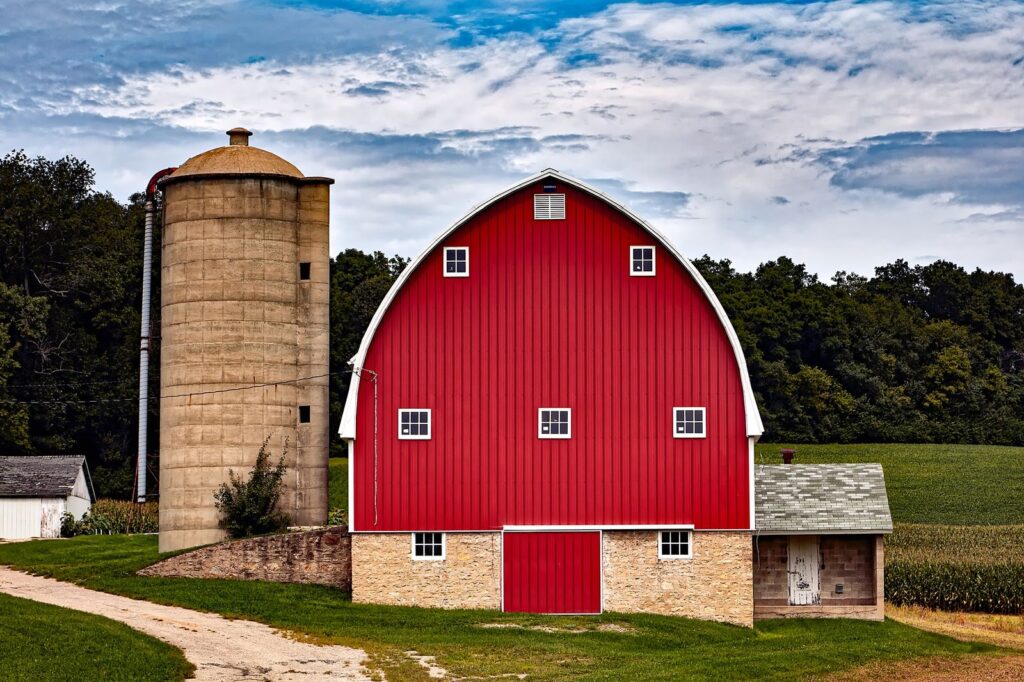
Rustic weddings, family reunions, corporate retreats, and fundraisers have made barn venues popular across rural America. An existing barn with good bones can be renovated, or you can build new and design the space around events from day one. Plan carefully for parking, restrooms, lighting, accessibility, and permits, and check whether your property needs rezoning or a special use permit to host events.
6. Landscaping and Snow Removal
Mowing and landscaping fill spring through fall, and snow removal fills the winter in northern states. Contracts with churches, schools, small businesses, and property managers provide reliable year-round work.
7. Skilled Trades
Plumbers, electricians, HVAC technicians, and roofers are in short supply in many rural areas, and customers often wait weeks for service. If you hold a trade license, your own shop can stay busy from day one. If not, these trades are worth training for.
8. Child Care
Many small towns are child care deserts, with far more working parents than available spots. A licensed in-home daycare or small center fills a real need and often builds a waiting list quickly.
9. Non-Medical Senior Care
Rural areas often have older populations, and many seniors want to stay in their homes. Companionship, transportation to appointments, meal preparation, and light housekeeping are services families gladly pay for.
10. Farm Stand and Agritourism
Fresh produce, eggs, honey, and baked goods sell well at roadside stands and farmers markets. Agritourism, such as pumpkin patches, corn mazes, u-pick berries, and farm tours, brings in visitors from nearby cities and can be very profitable during peak seasons.
11. Laundromat
Not every home has a washer and dryer, and laundromats are scarce in many small towns. Modern card-operated machines reduce the need for staff, and add-on services like wash-and-fold and commercial laundry boost revenue.
12. 24-Hour Fitness Center
A small keycard-access gym with quality equipment can serve a town that has no gym at all. Low staffing needs keep costs down, and monthly memberships create recurring revenue.
13. Pet Grooming and Boarding
Rural residents love their dogs as much as anyone. Grooming and boarding services, especially during holidays and hunting season, can be in high demand where the nearest kennel is far away.
14. Bookkeeping and Tax Preparation
Farmers, contractors, and small shop owners all need help with books and taxes. A local professional they can meet face to face often wins over an online service.
Building Your Space: A Practical Option for Rural Businesses
Many of the ideas above, including storage, repair shops, workshops, farm stores, and event spaces, need a durable building. In rural areas, post-frame (pole) construction is often one of the most cost-effective ways to get a large, open space with few interior columns. Suppliers such as pbsdirect offer complete pole building kits as well as metal roofing and siding packages that you or a local contractor can assemble.
Before you buy any kit, budget for the costs that are not in the box: building permits, site preparation and grading, concrete or post holes, labor, electrical work, insulation, and doors you may want to upgrade. Confirm that the design meets your local snow load, wind load, and zoning setback requirements, and talk with your county building department early. Getting these details right up front avoids costly changes later.
How to Succeed in a Small Town
- Be easy to find online. Claim your Google Business Profile and list your business in local directories. Even in small towns, most people search online before they call.
- Get involved. Sponsor youth sports, join the chamber of commerce, and show up at community events.
- Protect your reputation. In a small town, one bad experience gets shared widely. Fix problems quickly and generously.
- Serve the wider area. Market to neighboring towns and rural routes, not just your own zip code.
- Add an online channel. Selling products online or offering remote services can smooth out slow local seasons.
Ready to take the next step? Read our guides on how to start a small business in the USA and how to write a business plan step by step, or browse more small business ideas to start in America.